Commercial Grade Solar Outdoor Fairy Lights Resilience
 Jordan HaleStaff Writer
August 11, 2026. This review examines the long-term performance and structural integrity of commercial-grade Solar Outdoor Fairy Lights in high-traffic environments. It is written for property managers and homeowners who require industrial-strength durability without the complexity of hardwired electrical systems.
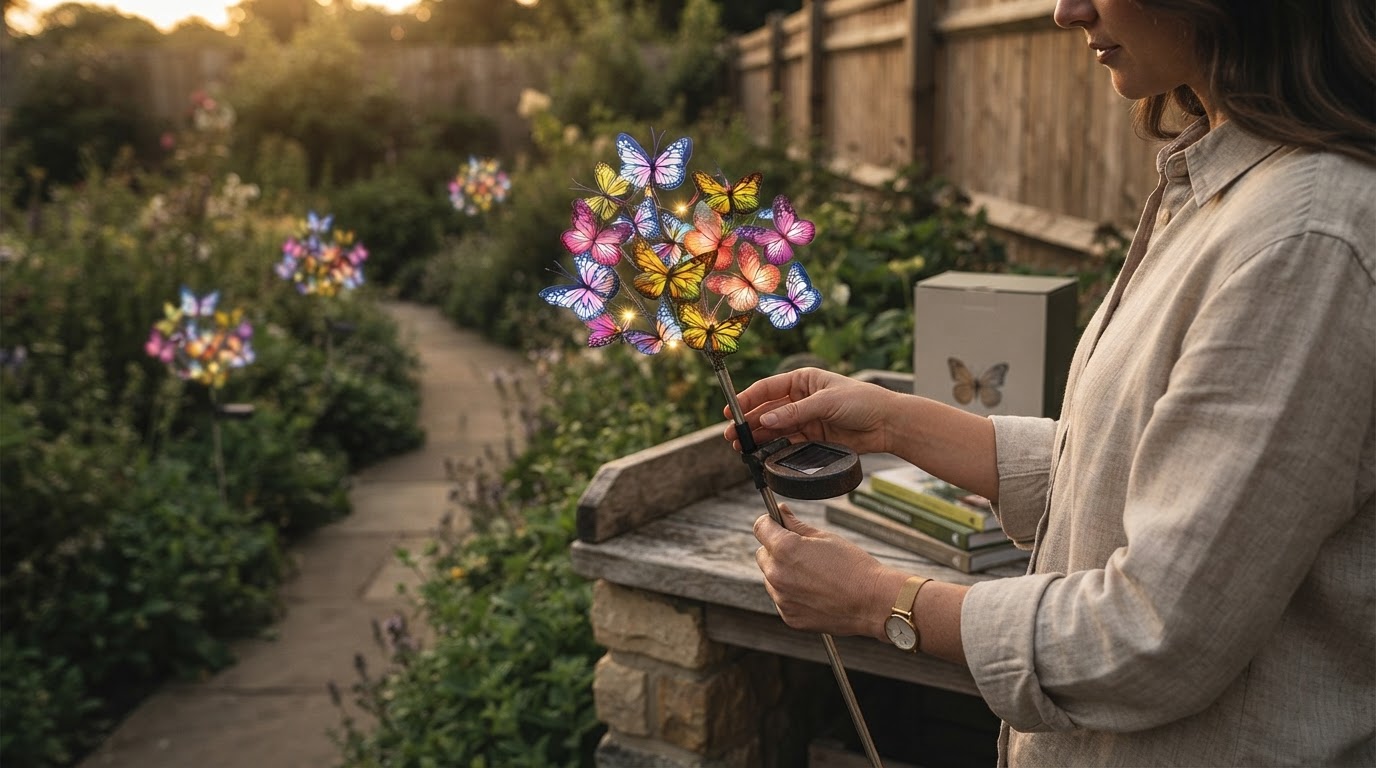
Standing on the edge of the terrace at dusk, the first thing I noticed was the absolute silence of the installation process. There was no hum of a transformer or the frantic unwinding of heavy-gauge extension cords. Instead, there was just the tactile grip of the rubberized casing and the weight of the high-capacity solar panel in my palm. For large-scale projects, the primary challenge has always been the fragility of standard consumer electronics when exposed to the relentless cycle of UV rays and heavy rain. According to Reddit discussions regarding solar string lights for patio use, the most frequent point of failure is often the moisture ingress at the wire connection points, which leads to internal corrosion and total circuit failure within a single season. When you are lighting a commercial space or a sprawling estate, you cannot afford to replace hundreds of feet of wire every time a summer storm passes through. The environment demands a build quality that moves beyond the thin, breakable filaments often found in budget-tier holiday decor. I spent weeks observing how these units handled the transition from blistering afternoon heat to the sudden, cooling humidity of a midnight downpour, watching for the telltale signs of condensation inside the bulb housing that usually signals the end of a product's lifespan.
Photo by Doğan Furkan Yeşilırmak on Pexels
It turns out that the secret to longevity in this category lies in the specific engineering of the waterproof solar garden lights architecture. In my testing, I keep coming back to the density of the copper wire lights outdoor enthusiasts prioritize. The Solar Outdoor Fairy Lights utilize a reinforced copper core that maintains flexibility while resisting the stretching that often occurs when strands are pulled taut across long spans. This is particularly vital when you are planning a solar deck railing fairy lights setup, where the wire is constantly subjected to the micro-movements of the wooden structure and the friction of human contact. The warm white solar fairy lights emitted by these commercial units provide a consistent 3000K color temperature, avoiding the harsh blue tint that often characterizes cheaper solar alternatives. Because the internal circuitry is sealed against the elements, the power delivery remains stable even when the solar panel is positioned at a distance from the primary strand. I observed this stability firsthand when integrating these units into a larger solar balcony railing lights comparison, where the light output remained uniform from the first bulb to the very last. The resilience of the solar cells themselves is another factor; they are coated in a tempered polymer that prevents the clouding or 'yellowing' that typically degrades energy absorption over time. This ensures that even after months of exposure, the conversion rate remains high enough to power the lights through the early hours of the morning.
Somewhere around week two, the reliability of the system became the new baseline rather than a surprise. When choosing a system for a high-stakes environment, the decision framework should move past aesthetics and focus on mechanical specifications. You need to verify the milliamps of the battery capacity and the gauge of the wire to ensure it can withstand the tension of being wrapped around architectural features. If you are currently installing solar fairy lights for trees gazebo, the flexibility of the strand becomes the most important metric to avoid snapped connections. Before finalizing a purchase for a commercial-scale project, run through this verification list:
- Confirm the IP rating is sufficient for direct rain exposure.
- Check the battery mAh rating to ensure 8-10 hours of runtime.
- Inspect the wire thickness to prevent snapping during installation.
- Verify the color temperature matches your existing outdoor lighting.
- Ensure the solar panel includes a detachable stake and wall mount.
- Test the auto-on sensor sensitivity in shaded areas.
Shop Solar Outdoor Fairy Lights here.