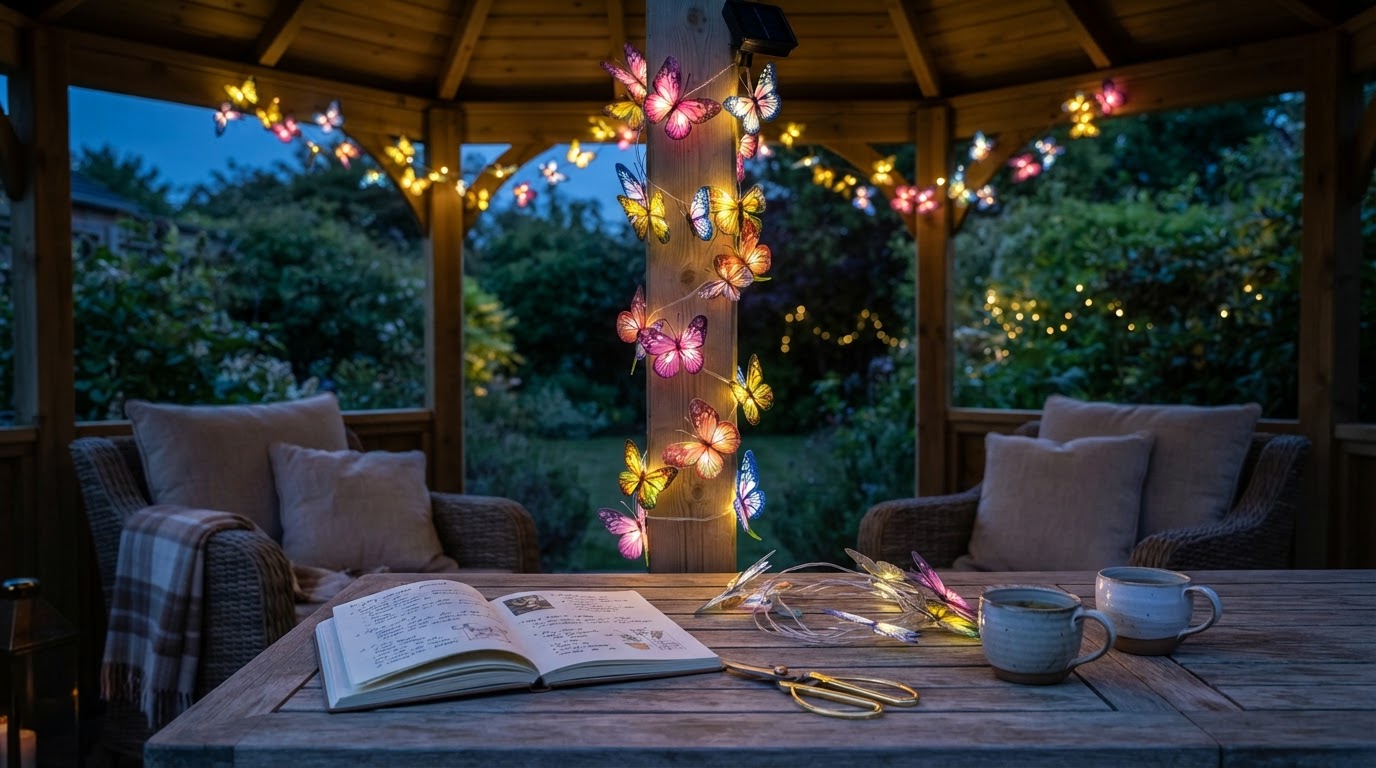
Solar Outdoor Fairy Lights for Gazebo Structures
 Priya RamanSenior Analyst
September 26, 2026. This analysis details the technical and aesthetic requirements for integrating Solar Outdoor Fairy Lights into gazebo architectures. It is intended for homeowners seeking to balance environmental sustainability with long-term structural illumination.
Selecting the right illumination for an outdoor structure requires a structured approach. Think of it as a matrix of durability and light density. When outfitting a gazebo, two axes matter here: the physical length of the copper wiring and the specific IP (Ingress Protection) rating of the internal components. A gazebo is a unique environment where the lighting must withstand overhead exposure while providing enough lumen output to define the space without overwhelming it.
The Challenge of Enclosed Outdoor Illumination
Gazebos present a distinct lighting challenge because they are often the focal point of a landscape but lack integrated electrical wiring. Homeowners frequently struggle with finding a solution that offers consistent brightness without the clutter of extension cords. According to SolarReviews, factors such as battery capacity and the quality of the solar panel are critical when selecting string lights, as these components determine how long the lights remain active after sunset. The placement of the solar panel is particularly difficult in gazebo settings, as the roof structure often creates shadows that can impede charging efficiency.
Furthermore, the physical environment of a gazebo—often exposed to wind and rain from all angles—demands a higher standard of weatherproofing. Standard indoor lights fail rapidly in these conditions due to moisture ingress. Similar challenges are found when installing solar fence lights decorative fairy options, where the exposure to the elements is constant. Without a dedicated solar solution, the structural integrity of the lighting wire can degrade, leading to short circuits. The goal is to achieve a seamless blend of light that follows the rafters and pillars of the gazebo, much like how one might apply solar curtain lights for gazebo to create a perimeter wall of light. Proper installation requires understanding the tension limits of copper wiring and the impact of temperature fluctuations on battery discharge rates.
Optimizing Solar Outdoor Fairy Lights for Structural Use

Photo by Elina Fairytale on Pexels
Solar Outdoor Fairy Lights address these challenges through modularity and specialized materials. High-quality sets, such as the Solar Storybook Fairy String Lights from Allsop Garden, utilize 33-foot copper strings that are specifically designed to be weather-resistant and flexible enough for wrapping around architectural beams. This flexibility is essential for gazebo rafters, where the wire must navigate sharp angles without snapping the internal conductive core.
Once you see it this way, the distinction between decorative accents and structural lighting becomes clear. For a gazebo, the lighting serves both as a safety feature and a design element. Utilizing solar garden fairy lights white provides a crisp, clean temperature that improves visibility for evening dining or reading. The use of LED technology ensures that the energy harvested during the day is used efficiently, often providing up to 8 to 10 hours of illumination on a single charge. In larger yards where the gazebo is part of a broader lighting scheme, these lights can be synchronized visually with solar firefly lights for yard to create a layered depth of field. The technical advantage of solar fairy lights lies in their autonomous operation; built-in light sensors ensure the system activates at dusk without manual intervention. This is particularly useful for gazebos located far from the main residence, where manual switching would be inconvenient. The durability of the copper wire also allows for permanent installation, reducing the need for seasonal setup and teardown.
A Framework for Gazebo Light Selection
The decision rule: prioritize wire length and mode versatility over raw lumen count to ensure the gazebo is outlined correctly without becoming overly bright. Because gazebos vary in size, calculating the total linear footage of the rafters and pillars is the first step in the procurement process. A standard 10x10 gazebo typically requires at least 60 to 100 feet of string lights to achieve a dense, professional look.
When evaluating different models, consider the following technical checklist:
- Total Wire Length: Ensure the string can cover the entire perimeter plus the vertical pillars.
- Battery Specification: Look for Ni-MH or Lithium-ion batteries with at least 600mAh capacity for sustained night-time use.
- Light Modes: Verify the presence of at least 8 modes (flashing, waves, steady-on) to match the desired ambiance.
- Weather Rating: Confirm the solar panel and wiring are rated for outdoor use, ideally IP65 or higher.
- Lead Cable Length: Ensure there is enough distance between the solar panel and the first LED to allow for panel placement in direct sunlight away from the gazebo's shadow.
Shop Solar Outdoor Fairy Lights here
Sources

- Solar Storybook Fairy String Lights (100 LEDs) - Allsop Garden
- [The 5 Best Solar String Lights Reviewed [2026] - SolarReviews](https://www.solarreviews.com/blog/top-solar-string-lights)
- Solar Solar Lights Collection - Harness Solar To Power Your Decor